“Masuk dalam kandang kambing, mengembek.
Masuk dalam kandang kerbau, menguak.”
Malay Proverb
The direct translation would be “If you enter into a goat’s pen, bleat. If you enter into a oxen’s pen, bellow”. The closest English equivalent would arguably be “When in Rome, do as the Roman’s do”. By peeling a couple of layers off, one could argue that the proverb is not only about conformity and fitting in, nor is it merely about respecting the environment into which one has arrived. It is, in essence, a process of becoming.
Becoming is far beyond mimicry or assimilation; it is a conscious choice of changing oneself whilst keeping one’s internal/eternal particularities intact, and yet positively adding to the present. I remember my mate John Botham saying, after a crit session at Scroope Terrace circa 1989, that I should sound more foreign as I would sound smarter. The lad from Chesterfield added, “You speak Queen’s English better than most of us”. Of course I wanted to sound smarter, but I was just becoming (pun not intended – I was a little spiffy at most). Scroope Terrace was changing me, honest.
I was part of the “Other”, this alien species that descended upon the unsuspecting academics and operations staff of the university
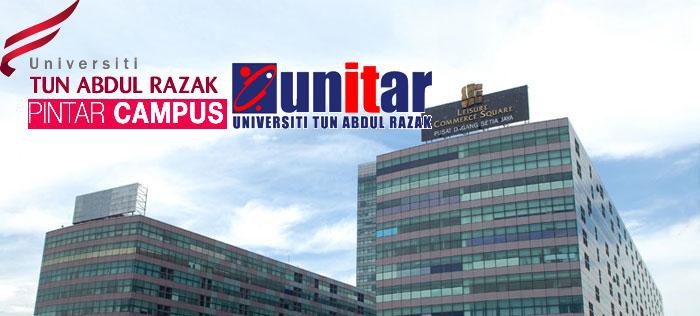
When I first arrived at Leisure Commerce Square, Sunway at the start of the second quarter of 2012, I was not yet ready to “become”. It was probably due to the fact that I was part of the Due Diligence Team focusing on the academic and operational aspects of the then-named University of Management and Technology, with the considerably hip acronym of UMTECH (one may think of CalTech). I was part of the “Other”, this alien species that descended upon the unsuspecting academics and operations staff of the university, prodding with probing queries, followed by the endless requests for more revealing data. Not that they were foreign to the idea of the potential acquisition by the governmental private equity that employed me; it was, after all, another one, after a beauty-pageant format tender that took place not nine months before.
Fast forward to 19 June 2012, when I was first officially designated as the Chief Executive Officer of Unitar Capital Sdn. Bhd., owner and operator of UMTECH. I was fortunate to start at roughly the same time as my work partner in compassion and crime. Lukman is the double-hatting Chief Operating Officer and Chief Financial Officer and had an upper hand (or finger) on the pulse of the university, having been an advisor for the original acquiring company. With both of us having had to hit the ground running when we started, there was little time for reflection and belly-gazing.
Fortunately, there was something that would force the necessary Gestalt institutional introversion, and it came in the form of an imminent Townhall. The people need to be addressed; clear and early direction is very much paramount when one undertakes a company-wide transformation. It was already three weeks since taking on the mantle of responsibility, and I had three weeks worth of Mentat-mode thinking to articulate. How should the messaging be structured? How should it end? What will the employees get out of it? What is to become of UMTECH? Many other questions also plagued my already-constipated mind.
A transformation can only take root when the trajectory is founded upon the respect of history
When in doubt, always go back to basics, and there is nothing as basic as the past. A transformation can only take root when the trajectory is founded upon from the respect of history. I had delved into the beginnings of UNITAR, as the university was originally known. It was conceived as the first Virtual University in Malaysia and Southeast Asia, and was one of the first three private universities in Malaysia. Its commitment to enable Access to Learning by going the virtual route is absolutely admirable, and it predates all other virtual universities in the region.
I have always had this fascination with the number three. Maybe it was my Cantabrigian experience, where the degree is founded on the concept of Tripos; or maybe, having been trained as an architect at the aforementioned UK institution, I had the knowledge the weight resting on three points was among the most stable structures one could possibly build. Thus it was conceived that to keep things simple, the new Mission of the university would count three components. The first, triggered by the Ghanaian quote in Christensen tome elucidated in the previous post, advised the respect of the past; therefore the first leg of the tripos would be “Enhancing Access to Learning“. The third and last leg, which is unavoidable due to the institution’s ownership by a private equity, has to be based on its financial veracity. A purely financial goal, however, would negate the developmental aspect of an educational institution, moreover one owned by a governmental PE. It has to be balanced with operational efficiency and future growth as well; thus the corresponding amalgamation was “Building a Sustainable Institution“. I was particularly pleased with the inclusion of the aspect of sustainability, a rather loaded word which has many other inflections, and can easily be expanded in the future. The third leg proved the most challenging, as it had to encapsulate what the institution is about, whilst holding a close embrace with the other two. Having had circa seven years experience teaching at various levels in three different universities, one is often pushed to having employability as a form of yardstick the educational outcome – fortunately upon consultation with our Board of Governors, “Producing the Most Employable Graduates” evolved to become “Producing Wholesome Graduates“. Employability is an outcome, and should not be a goal unto itself. A wholesome graduate of the university should not find great difficulty in procuring employment, and “wholesomeness” connotes the immersion of values and well-being within it. The Tripos is complete.
Employability is an outcome, and should not be a goal unto itself
The Tripos is what the institution does, not what it is. By nature, collectively, the faculties and programmes offered at UMTECH fell rather neatly within the realm of Social Science (with the possible exception of IT, which is arguably an enabler for all anyway). If one were to Google “Social Science Universities”, one would most likely find right at the top of the list that institution currently known as Harvard. Borrowing a word from the title of Christensen’s aforementioned book, combining it with the above, and adding as aspirational adjective, we arrive at the new Vision of UMTECH: “The Leading Innovative Social Science University”.
In immersing myself within the university, I initiated my own ‘becoming’ into my new role. By undertaking the process of identifying its new identity, I did perhaps nudge the whole institution into its own ‘becoming’, and thus articulating its possible future. In the end, the charting one’s future by a full acknowledgement of the past makes for, with God’s grace, the best of beginnings.
 Rearchitecting.Education
Pingback: REBRANDING UNITAR: A Careful Attempt at Uniting the Past with the Future | Rearchitecting Education